January 20, 2026
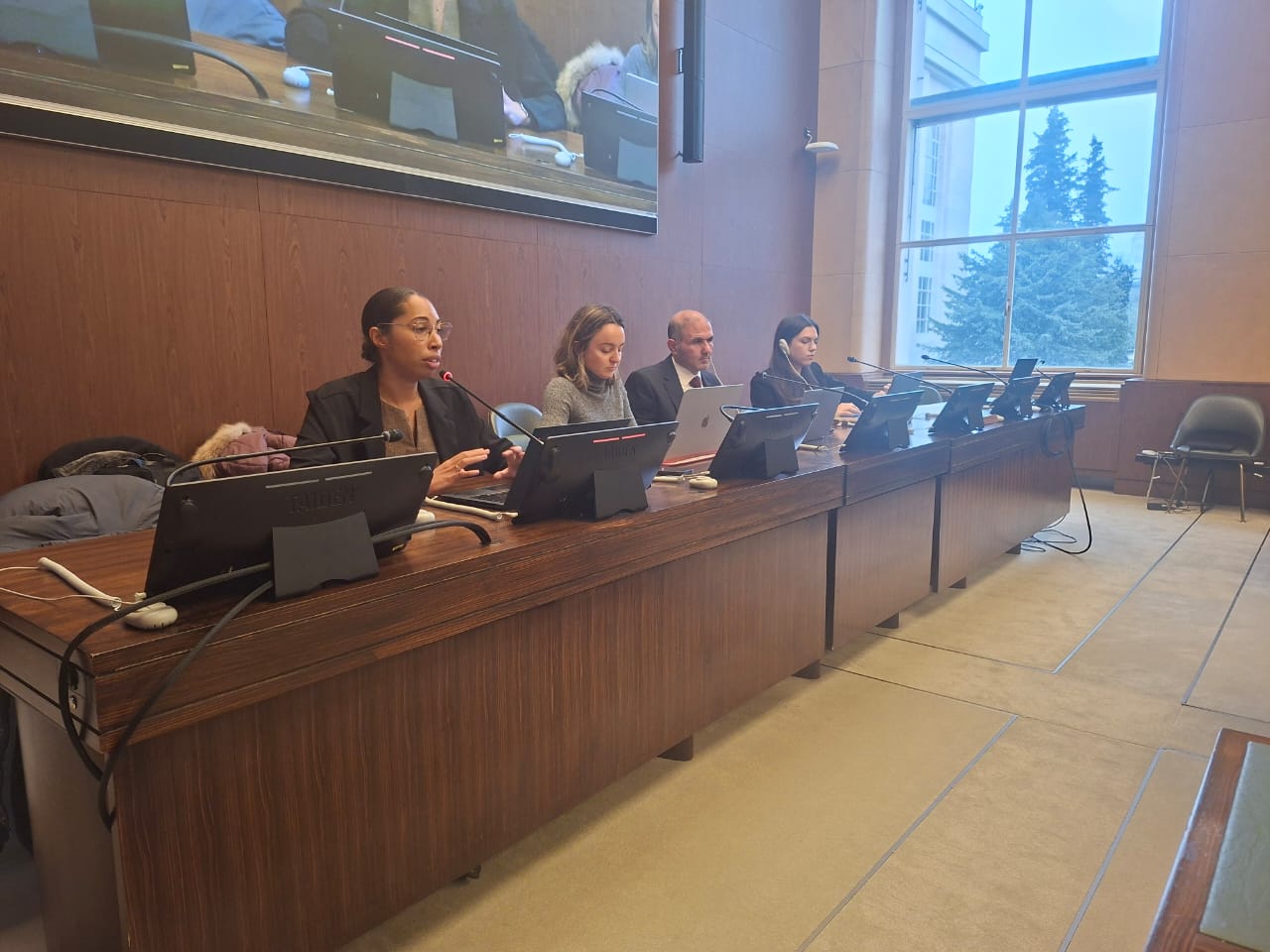
Photo of the panel discussion, with the curtesy of Cedar Center for Legal Studies
As Lebanon underwent its Universal Periodic Review (UPR) before the UN Human Rights Council on January 19, 2026, MENA Rights Group (MRG), together with Cedar Center for Legal Studies, the Committee for Justice, the International Rehabilitation Center for Victims of Torture and HuMENA for Human Rights and Civic Engagement, held a side event in Geneva to discuss the continued and systemic us of torture, unlawful refoulement of Syrian refugees, and Lebanon’s growing role in transnational repression.
The side event, “Torture and refoulement in Lebanon: a panel discussion ahead of Lebanon’s UPR”, brought together legal experts and human rights practitioners to present evidence-based findings and urge UN Member States to address these violations during the review.
Opening the event, Falah Sayed, Senior Legal Officer and Advocacy Lead at MRG, underscored that Lebanon’s UPR takes place amid persistent and well-documented violations. Despite ratifying the UN Convention against Torture (UNCAT) and adopting Anti-Torture Law No. 65 in 2017, torture and ill-treatment remain widespread in detention facilities, accountability mechanisms are weak, and survivors face severe obstacles in accessing justice and rehabilitation. She further stressed that Lebanon’s practices of refoulement – particularly of Syrian refugees – constitute a violation of article 3 of the UNCAT, which absolutely prohibits transferring individuals to a country where they could face torture.
Maeva Réné-Barry, UN Program Manager at the International Rehabilitation Council for Torture Victims (IRCT), highlighted structural failures that allow torture to persist, including the absence of a fully functioning and independent national preventive mechanism, weak enforcement of existing legislation, and the near-total reliance on civil society to provide rehabilitation services to survivors. She emphasised that without independent oversight, judicial accountability, and state-supported rehabilitation, Lebanon’s anti-torture framework remains largely symbolic.
Mohamad Sablouh, Head of the Legal Support Program at the Cedar Centre for Legal Studies, documented patterns of arbitrary detention, coercive practices, and forced returns carried out by Lebanese authorities. He warned that so-called “voluntary returns” frequently occur in contexts of detention and intimidation, rendering them unlawful under international law. He reiterated that deportations to Syria take place despite overwhelming evidence that returnees face a real risk of torture, enforced disappearance, and persecution.
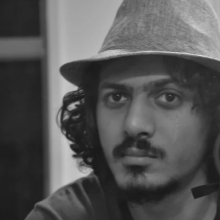
Finally, Tanya Boulakovski, Senior Legal Officer and Research Lead at MRG, presented the case of Abdulrahman al-Qaradawi, a Turkish-Egyptian poet and political dissident extradited by Lebanon to the United Arab Emirates in January 2025. She explained how Lebanon relied on an arrest warrant circulated by the Arab Interior Ministers’ Council (AIMC), a regional security body lacking independent oversight, to carry out the extradition, despite the clear risk of torture and arbitrary detention. The case illustrates how extradition frameworks, security and counter-terrorism laws, and regional cooperation mechanisms are misused to circumvent international human rights standards.
Ahead of the UPR, MRG submitted an alternative report to the attention of UN Member States on Lebanon’s participation in transnational repression, analysing flaws in its laws and practices. Our report made key recommendations to improve Lebanon’s human rights record relating to this issue, a number of which were reflected in the recommendations Lebanon received from states during the UPR.
Among the recommendations received by Lebanon, the United Kingdom (UK) and Mozambique urged the authorities to respect the principle of non-refoulement. In our report, MRG had recommended that Lebanon systematically assess extradition requests in full compliance with this principle, and refrain from carrying out extraditions violating non-refoulement.
Bulgaria, Burkina Faso, Croatia, Denmark, and Morocco made recommendations to operationalise its National Preventive Mechanism against Torture (NPM). As highlighted in our report, Lebanon’s political extradition of Abdulrahman al-Qaradawi to the UAE despite clear risks of torture, violated the absolute prohibition of torture enshrined in the UNCAT.
Additionally, Ghana recommended that Lebanon amend its domestic legislation on torture to align fully with international standards, Lesotho recommended that the country ensure accountability for torture and ill-treatment, and Switzerland suggested to modify Law No. 65/2017 on torture in line with UN Convention against Torture. These recommendations reflect our report findings, which recommended that Lebanon codify the principle of non-refoulement in line with article 3 UNCAT.
Finally, MRG’s report had made recommendations to ensure that the Lebanese authorities charged with examining, assessing and deciding on extradition requests exercise their powers independently and freely from any political pressure from foreign governments, that they ensure the right of appeal against the enforcement of an extradition order, with suspensive effect, and to undertake individual, impartial and independent investigations of each case when considering extradition requests. Our inputs were reflected in the recommendations put forth by Thailand, the Dominican Republic, Japan, Colombia, Costa Rica, Norway, Spain, and Switzerland, all urging Lebanon to ensure and strengthen the independence, impartiality and effectiveness of the judiciary.
We hope the recommendations put forth by civil society and UN Member States will be taken into account by Lebanon and contribute to improving the country’s human rights record.