February 26, 2026
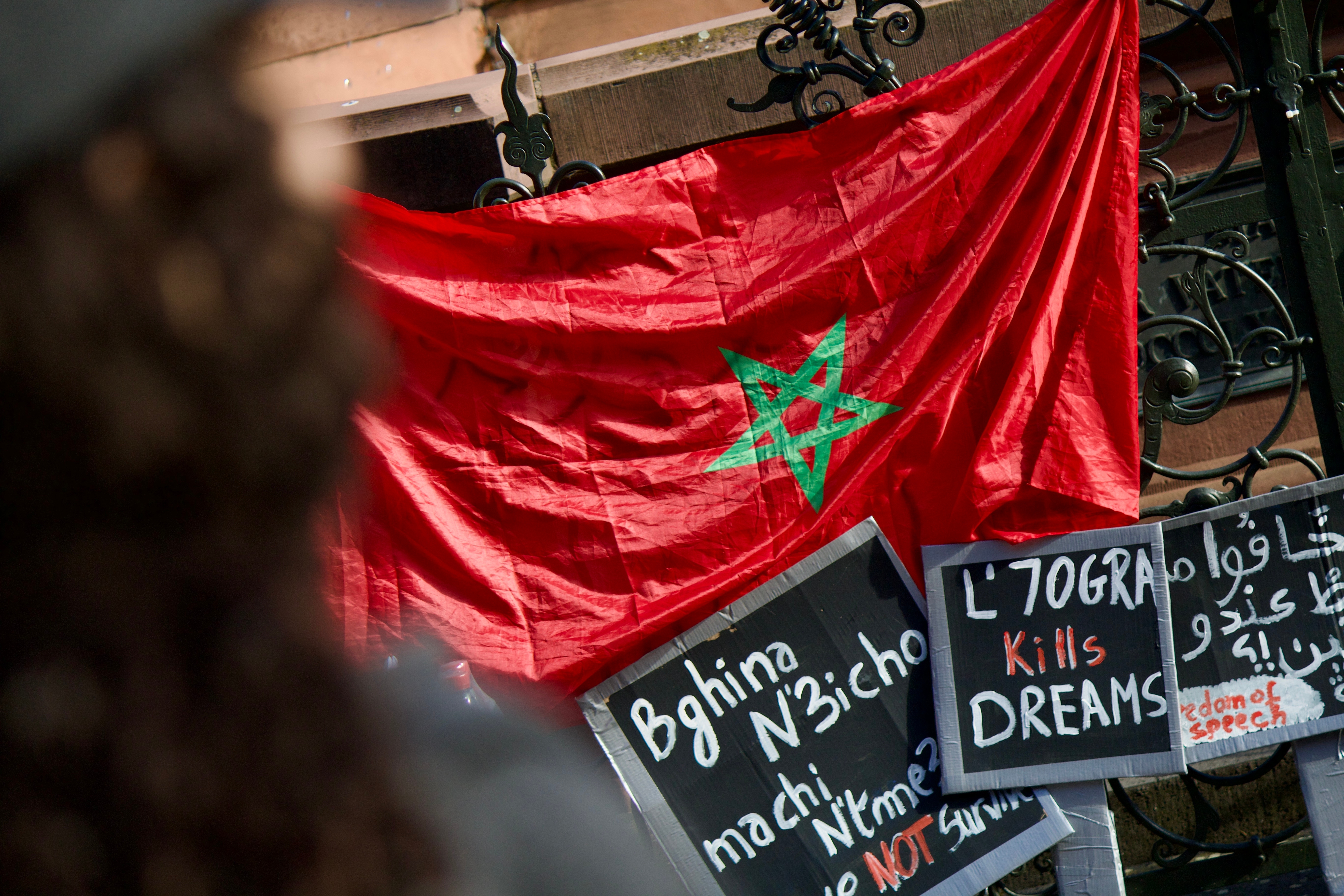
Rabat / Geneva, February 2026 — The Moroccan Association for Human Rights (AMDH) and MENA Rights Group urgently call for the opening of an independent, impartial and transparent investigation into the deaths of Abdelhakim Derfidi, Abdessamade Oubalat and Mohamed Rahali, killed on October 1, 2025 in Leqliâa when the Royal Gendarmerie fired live ammunition at GenZ212 movement protesters. In this context, the two organisations have referred the matter to the United Nations Special Rapporteur on extrajudicial executions and on the right to freedom of peaceful assembly. They denounce the disproportionate use of force and serious failings in the authorities’ investigation.
Born at the end of September 2025 amid high socio-economic tensions, the GenZ212 movement, driven by young people mobilised against inequality and the failings of public services, quickly spread to several cities in Morocco. In response, the police and the Royal Gendarmerie banned demonstrations and dispersed gatherings by force, causing the deaths of Abdelhakim Derfidi, Abdessamade Oubalat and Mohamed Rahali and injuring many others. According to a statement issued by the Presidency of the Public Prosecutor's Office on October 28, 2025, more than 5,780 people were arrested in connection with these events nationwide. More than 3,300 of them were released, while 2,480 were referred to the competent public prosecutors, of whom 959 were released on bail and 1,473 were detained.
On October 1, 2025, around 150 young people gathered in Leqliâa. Around 15 protesters burned rubbish and attempted to break down a metal barrier in front of the Gendarmerie station before being violently repressed. Derfidi, Oubalat and Rahali, aged between 24 and 35, were standing apart from the demonstrations and did not pose any imminent threat at the time of the events.
Abdessamade Oubalat, a 24-year-old student and photographer, had joined the demonstration with the sole intention of filming it. He was fatally shot in the head in an alleyway about 120 meters from the Gendarmerie station, far from the clashes. Mohamed Rahali, a 25-year-old hairdresser, was shot dead while riding his bicycle in an adjacent alley away from the Gendarmerie station. The bullet struck him in the back, killing him instantly, even though he did not pose any threat. Abdelhakim Derfidi, a 35-year-old construction worker, was fatally shot during an operation by the Gendarmerie to pursue demonstrators. He was returning from work and had taken a secondary route because the main road was blocked.
Families have faced serious violations of their rights: late notification of deaths, contradictory statements from the authorities, delays in the return of bodies, strict supervision of funerals and lack of access to autopsy reports. In addition, several personal belongings remain in the custody of the Gendarmerie without clear justification.
A judicial investigation was opened, but it was entrusted to the services belonging to the same body involved in the events, compromising its independence. There is no information to suggest that independent ballistic tests were carried out or that precautionary measures were taken against the officers concerned. The authorities, however, quickly released an official version justifying the use of force as self-defence, without waiting for the results of impartial investigations.
The AMDH calls for an independent and impartial investigation to establish the facts, examine all available evidence, and identify the perpetrators and those responsible. The investigation should ensure that they are held legally, criminally and administratively accountable, in line with the Moroccan State's compliance with national standards and international principles governing to the use of force, particularly regarding necessity, proportionality and legality.
MENA Rights Group warns that “the lack of an independent and transparent investigation into these deaths fuels a climate of impunity and seriously undermines the right to life and the right to peaceful protest.”
Morocco is a State party to the International Covenant on Civil and Political Rights and the Convention against Torture, which require prompt, independent, impartial and effective investigations into cases of arbitrary deprivation of life. These obligations, reiterated in the United Nations Principles on the Use of Force and in the Minnesota Protocol, also emphasise the importance of allowing the families of victims to participate effectively in the investigation, without compromising its integrity.
However, in this case, the investigation was entrusted to a department belonging to the same body involved, no independent expert opinion was made public, and the families were kept in the dark about essential information. Furthermore, no precautionary measures were announced against the officers concerned, such as suspensions, withdrawal of weapons or disciplinary proceedings. These failures, combined with the lack of effective involvement of the victims' relatives, compromise the right to truth, justice and an effective remedy, in violation of international standards.
Through their referral, the AMDH and MENA Rights Group call on UN mechanisms to urge the Moroccan authorities to shed light on the circumstances surrounding the deaths of Abdelhakim Derfidi, Abdessamade Oubalat and Mohamed Rahali, to guarantee the independence of the investigations and to bring those responsible to justice, in accordance with international standards.
The two organisations also call for the implementation of effective safeguards to protect the right to peaceful assembly and prevent any excessive use of force during demonstrations, so that such tragedies do not happen again.