March 19, 2026
Saudi Flag © Mehaniq, licensed under Canva.
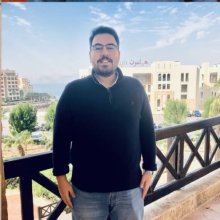
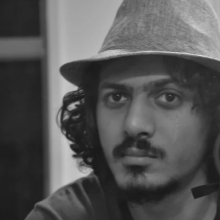
Today, the UN Working Group on Arbitrary Detention (UN WGAD) has published its decision on Saudi protestors Mohammad Labbad and Mohammad Abdulah al-Faraj, who are currently held in Dammam Prison. It finds their detention to be arbitrary and calls for their immediate release.
Both men have been detained by the Mabahith (General Investigation Directorate or GID) since 2017, and were later sentenced to death by the Specialised Criminal Court under ta’zir. The sentence was upheld in February 2025 by the Specialised Criminal Court of Appeal, and is now final.
They were arrested and charged for participating in demonstrations and funerals protesting against the discriminatory treatment of Shi’a Muslims, and for chanting anti-Government slogans. The charges were based mainly on Saudi Arabia’s counter-terrorism legal framework.
Prompted by a request for Opinion from MENA Rights Group and the European Saudi Organisation for Human Rights, on November 10, 2025, the UN WGAD found their detention to be arbitrary on multiple grounds.
Firstly, the UN WGAD found that the Saudi government failed to establish a legal basis for the deprivation of Labbad and al-Faraj’s liberty, notably since the alleged crimes occurred between 2011 and 2012, prior to the enacting of the Counter-Terrorism Law in 2014. It also echoed critiques by UN Special Procedures and MENA Rights Group that Saudi Arabia’s counter-terrorism law uses overly broad and ambiguous terms, encompassing “legitimate democratic opposition” and non-violent acts. Accordingly, the UN WGAD considered that their detention violated the principle of legality as stipulated in article 11 (2) of the Universal Declaration of Human Rights (UDHR).
Additionally, the UN WGAD concluded that “no trial should have taken place”, as these charges relate to their alleged participation in demonstrations, with insufficient evidence to support government claims of violence or engagement in “terrorism-related activities”. Therefore, it determined that their detention was based on the exercise of their rights to freedom of expression, freedom of peaceful assembly and freedom of association under articles 19 and 20 of the UDHR.
Furthermore, in the process of their trial and detention, the UN WGAD found numerous violations of articles 5, 10 and 11 of the UDHR. This includes the use of forced confessions obtained under torture, the absence of trial before an independent and impartial tribunal, and the denial of prompt and effective legal assistance.
In addition, Labbad and al-Faraj were held in solitary confinement, incommunicado, for several months, violating the Nelson Mandela Rules, which prohibit prolonged solitary confinement beyond 15 consecutive days.
Finally, the UN WGAD ruled that their arrest and detention constituted “discrimination based on religion and membership of a minority group”, breaching articles 2 and 7 of the UDHR, as it was based on their membership of a Shi’a minority.
Accordingly, the UN WGAD requested that Saudi authorities “take the steps necessary to remedy the situation of Messrs. Labbad and Al-Faraj without delay”, including immediate release and providing compensation and other reparations in accordance with international law.
It also urged the Saudi government to “bring its laws, particularly the anti-terrorism and anti-cybercrime laws, into conformity with the recommendations made in the present opinion”.
The Working Group now awaits a response from the Saudi authorities informing them of actions taken to implement the aforementioned recommendations.
MENA Rights Group and the European Saudi Organisation for Human Rights welcome the UN WGAD’s Opinion and reiterate the UN WGAD’s call on Saudi Arabia to immediately release Labbad and al-Faraj and to revise its draconian Anti-Terrorism Law and Anti-Cybercrime Law, in accordance with international human rights standards.
Signatories:
MENA Rights Group
European Saudi Organisation for Human Rights