July 16, 2026
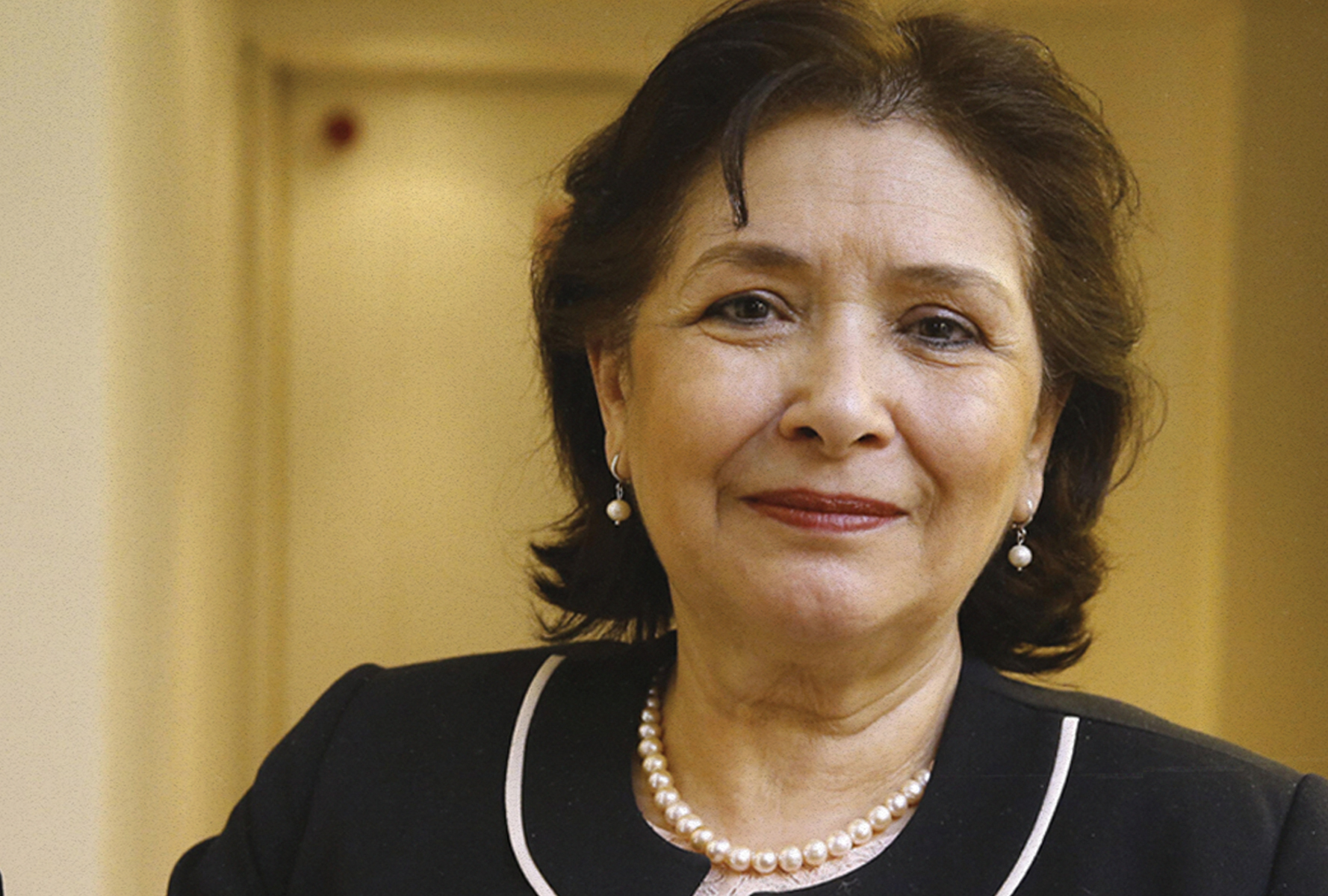
Sihem Bensedrine © HuMENA for Human Rights and Civic Engagement
While awaiting the scheduling of Sihem Bensedrine’s appeal trial before the Tunis Court of Appeal, the undersigned organisations express their deep concern over the judgment issued against the prominent human rights defender and former President of the Truth and Dignity Commission (TDC), sentencing her to twenty-five years in prison in connection with two cases directly related to her work as President of the Truth and Dignity Commission and the preparation of its final report.
This judgment does not only target Sihem Bensedrine; it undermines one of Tunisia’s most important processes for uncovering the truth and ensuring accountability. It creates a dangerous chilling effect on victims, witnesses, human rights defenders, and all those working to document violations or advocate against impunity. It also raises serious concerns over the use of criminal proceedings to undermine transitional justice and punish human rights actors for work that falls within their legitimate and legally mandated responsibilities.
On June 26, 2026, the Court of First Instance of Tunis issued prison sentences against Sihem Bensedrine in two cases related to her former work at the Truth and Dignity Commission: one of 10 years and another of 15 years. The cases involve charges including “fraud,” “use of forged documents,” and “abuse of official capacity to harm the administration,” based on allegations related to the content of the Commission’s final report, particularly the chapter concerning corruption in the banking sector. Bensedrine has appealed the judgment and remains at liberty pending appeal.
This prosecution comes despite the fact that the Truth and Dignity Commission was established under Organic Law No. 53 of 2013 on Establishing and Organizing Transitional Justice. The Commission’s mandate was to investigate and document human rights violations, corruption, and gross violations committed between 1955 and 2013, refer cases to the competent judiciary, and issue recommendations concerning institutional reforms, reparations, and guarantees of non-recurrence. Article 69 of the same law stipulates that members and staff of the Commission, as well as anyone carrying out a task assigned by it, shall not bear responsibility for the content of reports, conclusions, opinions, or recommendations issued in implementation of the law.
Accordingly, prosecuting the former President of the Commission over the content of its final report raises serious legal concerns, as it undermines the legal protections granted to members of the Commission under Article 69 of the Transitional Justice Law and transforms work falling within the mandate of an independent transitional justice body into grounds for criminal prosecution. It also erodes the confidence of victims, witnesses, researchers, and human rights defenders in their ability to uncover the truth and document violations without facing future criminal prosecution, harassment, or retaliation.
The seriousness of this case is further heightened by the issues raised regarding the Tunisian-French Bank (Banque Franco-Tunisienne) file. According to publicly available information concerning the international arbitration case ABCI Investments Limited v. Republic of Tunisia, the liability decision in the arbitration proceedings was issued in 2017, before the publication of the Truth and Dignity Commission’s final report, while the final award was issued in 2023. Available legal information indicates that the final award did not grant the major financial claims submitted by the claimant company. Therefore, linking the alleged harm to the content of the Commission’s final report, as was claimed by judicial authorities to convict Sihem Bensedrine, runs counter to this sequence of events.
The trial proceedings also raise serious concerns regarding fair trial guarantees. The first hearing was held on June 1,2026, despite the fact that Bensedrine and her defense team had not received a copy of the indictment decision issued by the Indictment Chamber, which defines the charges and facts attributed to her. A subsequent hearing was held on 18 June during a national lawyers’ strike. During a second hearing on June 25, a delegation of Amnesty International observers were prevented from attending the hearing, without providing any clear justification, despite the hearing’s public character. These developments have undermined the right to a fair trial, including the right to access case files, public hearings, and judicial independence — guarantees protected under Article 14 of the International Covenant on Civil and Political Rights (ICCPR), to which Tunisia is a party.
The undersigned organisations call on the Tunisian authorities and the competent judicial authorities to ensure that the appeal proceedings are conducted in accordance with international fair trial standards. This includes guaranteeing their public nature and allowing the presence of family members, journalists, representatives of civil society organisations, international observers, and diplomats, and ensuring that any restrictions on attendance are based only on clear, necessary, proportionate, and legally justified grounds. The defense team must also be granted full and prior access to the case file and provided with sufficient time and facilities to prepare its defense, including the ability to present arguments related to the legal protections granted to Truth and Dignity Commission members under Article 69 of the Transitional Justice Law, as well as arguments concerning the absence of a causal link between the Commission’s final report and the alleged harm.
The undersigned organisations emphasize the need for the competent judicial authorities to examine the appeal hearings independently and impartially, free from any political, security, or media pressure. They must also ensure that lawyers, family members, journalists, observers, and civil society representatives are not subjected to reprisals for attending, monitoring, or reporting on the proceedings.
This case cannot be separated from the broader context of restrictions on judicial independence and civic space in Tunisia in recent years. Since 2022, the country has witnessed measures which have eroded the institutional safeguards for judicial independence, including the dissolution of the Supreme Judicial Council and the dismissal of dozens of judges. This trajectory has also affected the specialised criminal chambers for transitional justice, which have seen their work disrupted, undermining victims’ right to access justice and obtain redress.
The case of Sihem Bensedrine is part of a broader pattern of prosecutions and measures targeting civil society organisations, journalists, lawyers, political opponents, and human rights defenders. This pattern was further illustrated in the final days of June 2026, when several human rights defenders and lawyers were sentenced to prison, including Khaled Krichi, former chair of the Arbitration and Conciliation Commission at the Truth and Dignity Commission, who was sentenced to ten years in the same cases, and Saadia Mosbah, President of the anti-racism organisation Mnemty, whose eight-year sentence was upheld on appeal on June 23, in addition to other judgments against members of the organisation.
Authorities also continue to use vague and restrictive legal provisions to limit freedom of expression and freedom of association, including Decree-Law No. 54 of 2022, which has been used to prosecute journalists, lawyers, activists, and social media users for peacefully exercising their right to expression. This pattern creates a widespread chilling effect that extends beyond those directly targeted, affecting everyone engaged in human rights documentation, advocacy, victim support, or judicial monitoring.
Transitional justice is essential to establishing an independent, impartial and procedurally sound justice system for all. It requires protecting those who worked to uncover the truth, ensuring victims’ access to justice and remedies, and preventing the use of courts and laws to punish those who contributed to documenting violations. The conviction of Sihem Bensedrine for her work at the Truth and Dignity Commission threatens the right to know the truth, undermines the independence of transitional justice institutions, and undermines the fight against impunity.
Therefore, the undersigned organisations call on the Tunisian authorities to:
Quash the judgment issued against Sihem Bensedrine and drop all charges related to the exercise of her legal responsibilities within the Truth and Dignity Commission.
Guarantee the public nature of the appeal proceedings and allow the attendance of family members, journalists, civil society representatives, international observers, and diplomats, and ensure that attendance is not restricted except on clear, necessary, proportionate, and legally justified grounds.
End the use of criminal proceedings to target former members of the Truth and Dignity Commission, human rights defenders, journalists, lawyers, and other civil society actors.
Respect the legal protections granted to members and staff of the Truth and Dignity Commission under Article 69 of the Transitional Justice Law and ensure that they are not criminally prosecuted for reports, conclusions, or recommendations issued within their legal mandate.
Take concrete steps to restore institutional safeguards for judicial independence in accordance with international standards and ensure that the judiciary is not used as a tool to punish peaceful human rights, political, or civic work.
End restrictions on civil society organisations and repeal or amend legislation used to limit freedom of expression, freedom of association, and peaceful assembly, including Decree-Law No. 54 of 2022, in line with Tunisia’s international obligations.
Renew commitment to the transitional justice process, reactivate the work of specialised criminal chambers, ensure implementation of the Truth and Dignity Commission’s recommendations, and protect victims, witnesses, and human rights defenders from any form of prosecution, restriction, or retaliation.
The undersigned organisations also call on the European Union, its Member States, diplomatic missions in Tunisia, and relevant United Nations mechanisms to publicly monitor the appeal proceedings in the Sihem Bensedrine case, attend the appeal hearings, and place the protection of judicial independence, civic space, and the transitional justice process at the center of any political, judicial, or security dialogue and cooperation with Tunisian authorities.
The continuation of prosecutions linked to the work of the Truth and Dignity Commission does not only affect the rights of Sihem Bensedrine, Khaled Krichi, and other former Commission members. It threatens Tunisians’ right to know the truth, victims’ right to justice and redress, and civil society’s ability to operate without intimidation or criminalisation. Tunisian authorities must halt this trajectory and protect those who worked to uncover violations rather than prosecute them.
Signatories:
HuMENA for Human Rights and Civic Engagement
Egyptian Initiative for Personal Rights (EIPR)
No Peace Without Justice
Social Accountability
Fareq Platform
Chadian Anti-Corruption Organization (OTAC)
Al Bawsala
Egyptian Front for Human Rights
Avocats Sans Frontières
Association tunisienne de défense des libertés individuelles
Law and Democracy Support Foundation (LDSF)
Skyline International for Human Rights (SIHR)
CIVICUS
West African Human Rights Defenders Network
REDWORD for Human Rights & Freedom of Expression
Network of Civil Society Organisations for Election Observation and Monitoring in Guinea – ROSE
Kazakhstan International Bureau for Human Rights and Rule of Law
EuroMed Rights
MENA Rights Group
Organisation Mondiale Contre la Torture (OMCT)
Awledna Tunisian Association
Amnesty International
Innovation for Change-MENA Hub
Refugees Platform Egypt (RPE)
Gulf Centre for Human Rights (GCHR)
CFJ Committee for Justice
Robert & Ethel Kennedy Human Rights Center.