December 18, 2025
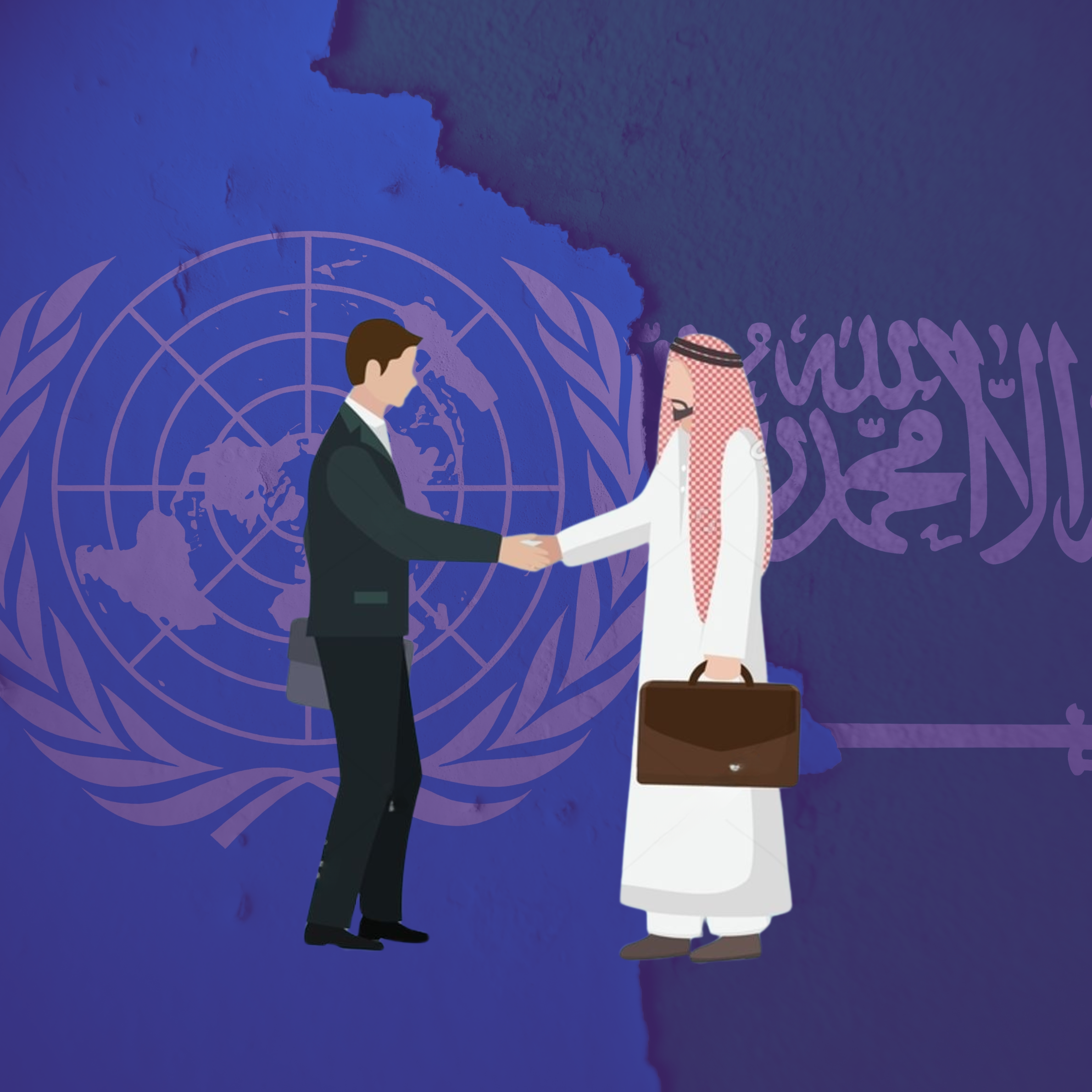
©Shutterstock: ID 2561591641.
December 16, 2025
To: Mr. Alexandre Zouev
Acting Under-Secretary-General for Counter-Terrorism
Head of UN Office of Counter-Terrorism (UNOCT)
Executive Director of the United Nations Counter-Terrorism Centre (UNCCT)
Re: Urgent concerns regarding relationship of UNOCT and UNCCT with Saudi authorities and its Presidency of State Security
Dear Mr. Zouev,
We, ALQST for Human Rights and MENA Rights Group, write with profound alarm following your response of November 7, 2025 to our letter of October 22, 2025, and the subsequent announcement on November 26, 2025 that you signed a Memorandum of Understanding (MoU) with Saudi Arabia's Presidency of State Security (PSS) during your recent visit to Riyadh.
Your November 7 response offered assurances about adherence to UN principles and international law, and commitments to engage with civil society to enhance the human rights compliance of global counter-terrorism efforts. However, we regret that your assurances were only generic as they failed to address any of the specific concerns we raised. Instead, merely three weeks after acknowledging our concerns, the UNCCT proceeded to formalize and expand the very relationship we had warned against.
Memorandum of Understanding with the PSS
The signing of a MoU with the PSS, and directly with its head, Mr. Abdulaziz al-Howairini, has de facto deepened the UNCCT’s relationship with one of the most notorious state security apparatuses in the region, and represents a troubling escalation that fundamentally contradicts the human rights principles you invoked in your response.
You referenced UNOCT's implementation of the UN Human Rights Due Diligence Policy (HRDDP). According to this policy, UN entities are required to assess the risk that support to non-UN security forces may contribute to violations of international human rights law. Sources of information for the risk assessment include reports of the Office of the High Commissioner for Human Rights (OHCHR) to the Human Rights Council, reports of the Universal Periodic Review (UPR), UN Treaty Bodies and Special Procedures. Risk assessments sources also include reports from international non-governmental organizations, such as Human Rights Watch and Amnesty International.
A meaningful risk assessment drawing on these sources would have immediately revealed the PSS's systematic record of grave human rights violations. As we detailed in our October letter, Mr. al-Howairini, with whom the MoU was signed, was directly implicated in the murder of journalist Jamal Khashoggi, as confirmed by former UN Special Rapporteur Agnes Callamard's investigation.
Additionally, by reportedly aiming to “to enhance cooperation and exchange of expertise in support of national, regional and global counter-terrorism efforts”, the MoU deepens collaboration in the field of counter-terrorism, which is specifically the framework that Saudi authorities and the PSS systematically weaponize to commit grave human rights violations, including arbitrary detention, torture, enforced disappearance, and summary executions against peaceful dissidents, human rights defenders, and journalists.
We reiterate that such human rights abuses have long been documented and criticized by UN human rights experts, including UN Special Procedures mandate holders, including the UN Special Rapporteur on counter-terrorism and human rights, as well as the Committee against Torture, the Committee on the Elimination of Discrimination against Women, and the Committee on the Elimination of Racial Discrimination. Saudi Arabia has also received recommendations to align its counter-terrorism laws and policies with international human rights standards in all of its UPR cycles.
These concerns have also consistently been reported by civil society organizations like ALQST for Human Rights and MENA Rights Group, as well as other international NGOs such as Amnesty International and Human Rights Watch – the very sources explicitly cited in the HRDDP.
Appointment of Saudi Arabia as Chair of the regional working group on “countering terrorist travel”
As part of the November 26, 2025 press release on your Riyadh visit, we were also concerned to see that the Kingdom of Saudi Arabia was appointed as the first rotational Chair of the newly launched Regional Working Group (RWG) on Advance Passenger Information (API) and Passenger Name Record (PNR) systems for Member States of the League of Arab States.
Noting that the new RWG is part of “a growing global network of regional mechanisms under the UN Countering Terrorist Travel Programme, supporting Member States to use passenger data to detect and prevent terrorist travel and serious crime”, we have several concerns that we would like to highlight.
First, we are alarmed that Saudi Arabia is holding yet another influential position in an initiative undertaken as part of UN counter-terrorism efforts. This is concerning given Saudi Arabia’s abysmal counter-terrorism-related human rights record detailed above, specifically regarding Saudi authorities’ practice of travel bans arbitrarily imposed on human rights defenders baselessly accused of terrorism, as well as their families. This is notably the case of Loujain al-Hathloul, a prominent Saudi women’s rights defender who campaigned against the driving ban and the male guardianship system. Sentenced in 2020 by the Specialized Criminal Court (SCC) to five years and eight months in prison (partially suspended) following a grossly unfair trial, in addition to a five-year travel ban which was due to expire in 2023, al-Hathloul currently remains arbitrarily banned from travel in Saudi Arabia. Her mother and father have also been subjected to an unofficial, unjustified, and open-ended travel ban since 2018.
Second, we would like to point out that several human rights concerns regarding the UN Countering Terrorist Travel Programme have been raised by the former UN Special Rapporteur on counter-terrorism and human rights. The former UN expert notably noted that “a number of States with extremely concerning records of systematic human rights abuse” have benefited from the Counter Terrorist Travel programme, and highlighted that while the Programme is described as an ‘All-of-UN’ partnership, “two of the agencies most directly concerned with the rights of individuals in the border management context, namely the United Nations High Commissioner for Refugees (‘UNHCR’) and the Office of the High Commissioner for Human Rights (‘OHCHR’), were not identified as partners in the programme at its launch, and the Special Rapporteur understands that those agencies were not substantively involved in the programme’s development or initial roll-out.”
Conclusion
In light of the above-mentioned consideration, we question how the UNCCT’s continued collaboration with Saudi authorities and the PSS, including the recent signing of a MoU, could possibly be consistent with international human rights law and the HRDDP.
The signing of the UNCCT/PSS MoU and Saudi appointment as RWG Chair suggests either that no meaningful risk assessment was conducted, or that identified risks were disregarded. Either scenario raises serious questions about the UNCCT’s commitment to its own human rights safeguards.
While a meaningful application of this policy would have precluded this collaboration entirely, we urge you to immediately suspend your MoU with the PSS, and to adequately address our above-mentioned concerns regarding your collaboration with the PSS and Saudi authorities in the field of counter-terrorism.
In the meantime, we reiterate our questions formed in our previous letter, and also request additional information on:
The specific terms of the MoU signed with the PSS, and whether it will be made public;
What risk assessment, if any, was conducted under the HRDDP before signing the MoU with the PSS;
What due diligence was conducted before Saudi Arabia was appointed as Chair of the RWG on countering terrorist travel, given its documented abuse of travel bans against human rights defenders and their families.
We again request a meeting to discuss these urgent concerns directly and hope to receive a substantive response addressing our questions with concrete information.
Sincerely,
ALQST for Human Rights and MENA Rights Group