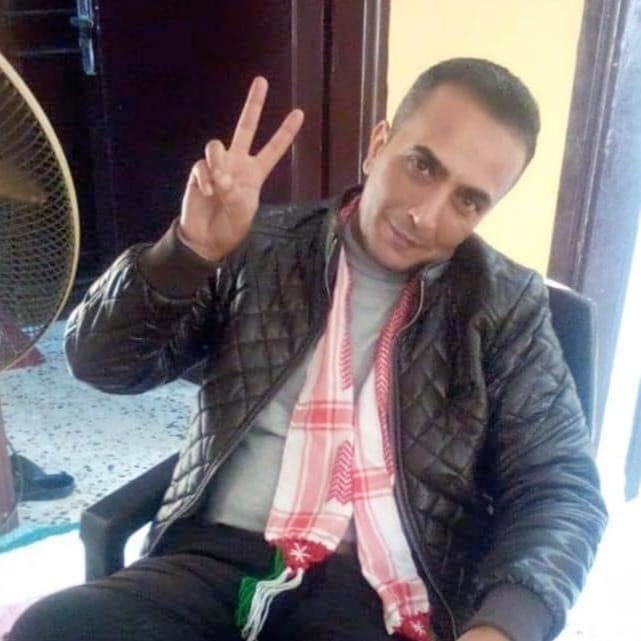

Between 2011 and 2013, Saudi law student Abdulrahman al-Khalidi was a political activist and a known dissident. He was active in the field of human rights, advocating for democratic reforms and participating in several civil society campaigns with prominent Saudi figures such as Omar Abdulaziz al-Zahrani and Jamal Khashoggi. Following a campaign of mass arrests undertaken by the Saudi authorities against his immediate surroundings in the aftermath of the Arab Spring, he decided to flee the country and seek refuge abroad. Following his stays in Egypt, Qatar and Turkey, he decided to head to the European Union in 2021 with the intention of applying for asylum.
Shortly after crossing the Turkish-Bulgarian border on October 23, 2021, he was arrested in Bulgaria for entering without a visa authorisation.On November 16 2021, he applied for asylum and on November 25, 2021, he was transferred to Busmantsi Detention Centre near Sofia’s International Airport. On February 14, 2022, Al-Khalidi’s complaint against his administrative detention was rejected.
On May 25, 2022, his request for asylum was denied by the State Agency for Refugees . The Agency claimed that “official authorities in the Kingdom of Saudi Arabia have taken measures to democratise society” and considered that “the personal motives he referred to for his desire to live in the Republic of Bulgaria cannot be evaluated as humanitarian.” On June 9, 2022, he challenged the refusal of his asylum application by appealing to the Administrative Court in Sofia.
On February 20, 2023, the Administrative Court in Sofia rejected the appeal and upheld the decision of the the State Agency for Refugees. The Administrative Court in Sofia considered that the State Agency for Refugees correctly assessed that al-Khalidi had no well-founded fear of persecution and he did not belong to any group that is at risk of persecution in Saudi Arabia. On March 13, 2023, he filed an appeal to the Administrative Supreme Court against the rejection of his asylum claim.
On September 27, 2023, the Administrative Supreme Court rendered its judgment, and decided to annul any lower decision regarding al-Khalidi’s asylum claim and send it back to the lower courts to be retried. This was due to procedural vices and errors, namely the fact that there was no translation available into Arabic and that he was wrongfully considered to be Syrian.
On December 12, 2023, his case on his request for asylum was heard again before the Administrative Court in Sofia. The Court decided to send his case back to the State Agency for Refugees for reconsideration.
On January 9, 2024, the Administrative Court in Sofia overturned the decision to reject al-Khalidi’s asylum claim by the State Agency for Refugees after re-examining the case.
Al-Khalidi stood a hearing before the Administrative Court in Sofia on January 18, 2024 regarding his detention. The decision was rendered very quickly the day after, and his release was ordered.
However, on January 22, 2024, an administrative decision was issued by the State Agency for National Security in which his release was denied. The grounds for refusal were not substantiated.
On January 26, 2024, the Administrative Court in Sofia refused his release order.
On February 5, 2024, the State Agency for National Security issued an order to deport al-Khalidi to Saudi Arabia and ban him from residence within the European Union for 10 years. This was based on their claim that the agency had received information that he posed a threat to national security.
On February 7, 2024, al-Khalidi was visited by an investigator from the State Agency for National Security and handed an untranslated decision for his immediate deportation. The decision is reportedly issued by the State Agency for National Security.
In March 2024 al-Khalidi reported that he was brutally beaten by police officers.
On April 24, 2024, the Administrative Court in Sofia upheld the decision to overturn the rejection of al-Khalidi’s asylum claim by the State Agency for Refugees.
On April 25, 2024, the Administrative Supreme Court overturned the decision not to grant him asylum and sent his case back to the State Agency for Refugees for reconsideration. It considered that the objection of the State Agency for National Security to his asylum claim was unrealistic and not based on facts.
Despite the Administrative Supreme Court’s finding in favour of granting him asylum, the State Agency for Refugees denied his claim once again on June 28, 2024 after conducting new administrative proceedings.
On October 21, 2024, the Administrative Court in Sofia upheld the order to deport al-Khalidi after rejecting the appeal against the State Agency for National Security’s decision.
On March 25, 2025, the Administrative Court in Sofia dismissed al-Khalidi’s appeal against the rejection of his asylum claim by the State Agency for Refugees.
On March 26, 2025, the Administrative Court in Sofia ordered al-Khalidi’s immediate release after quashing a previous decision to extend his detention by the State Agency for Refugees from November 6, 2024. On March 28, 2025, the State Agency for Refugees informed the Ministry of the Interior that there was no longer any legal basis for continuing al-Khalidi’s detention. However, that same day, the Chairperson of the State Agency for National Security ordered that he be placed back in detention on the basis of their previous orders for his deportation to Saudi Arabia and 10-year prohibition from residing within the European Union. These decisions were final and to be enforced upon the resolution of al-Khalidi’s case, relating to his claims that he faced arbitrary detention, prosecution or torture and a threat to his life if returned to Saudi Arabia. Simultaneously, possibilities were being explored for deportation to a third country.
On June 12, 2025, a study on the transnational repression of human rights defenders, published by the European Parliament’s Subcommittee on Human Rights (DROI), highlighted the case of al-Khalidi as a key example of the tactic of detention used in physical transnational repression.
On June 23, 2025, the First Chamber of the Administrative Supreme Court overturned the Administrative Court in Sofia’s decision to dismiss al-Khalidi’s appeal against the State Agency for Refugees’ denial of his asylum claim. The case was therefore remitted for reconsideration by the Administrative Court in Sofia.
On July 15, 2025, the Administrative Supreme Court rejected al-Khalidi’s appeal against his detention order.
On August 20, 2025, the State Agency for National Security submitted a letter to the Directorate of Migration claiming to have further proof that al-Khalidi poses a threat to national security.
On September 26, 2025, the Directorate of Migration issued a decision to extend al-Khalidi’s detention by 6 months, or until the obstacles to his deportation were removed and the Directorate had received the delayed deportation document. On October 3, 2025, an appeal was lodged against this decision.
On November 6, 2025, the Administrative Court in Sofia overturned the Directorate of Migration’s decision to extend his detention, and issued a decision to release al-Khalidi immediately, on the grounds that his continued detention was not legally justified. The Court dismissed the State Agency for National Security’s justification for continued detention on national security grounds, as there was no factual basis to reinforce their claim that al-Khalidi posed a threat. On November 7, 2025, this decision was appealed by the Directorate of Migration, resulting in his continued detention until the case had been heard by the Administrative Supreme Court.
On February 17, 2026, the Administrative Supreme Court overturned the decision of the Administrative Court in Sofia and dismissed al-Khalidi’s appeal against his continued detention, following the appeal from the Directorate of Migration. This therefore upholds the Directorate of Migration’s decision to extend al-Khalidi’s detention until March 28, 2026, or until he is deported.
On March 24, 2026, the Administrative Court in Sofia upheld the decision by the State Agency for Refugees to deny al-Khalidi’s asylum claim, thereby rejecting his appeal. The Court refused to grant him refugee and humanitarian status by ruling that his appeal was unfounded and unsubstantiated. The Court denied that al-Khalidi risked facing persecution, torture, inhuman or degrading treatment or punishment, or the death penalty if returned to Saudi Arabia. Furthermore, the Court held that if he was granted refugee status, he would pose a threat to Bulgarian national security. It denied that al-Khalidi could prove that he was previously a political dissident in Saudi Arabia, and falsely considered that he had concealed his true intentions for arriving in Bulgaria.
Al-Khalidi has appealed the decision of the Administrative Court in Sofia. He remains detained and at risk of deportation. Should he be sent back to Saudi Arabia, he could be subjected to torture, ill-treatment, and even the death penalty for his past activism.
On August 21, 2026, he was released after five years in detention.
On October 27, 2026, al-Khalidi’s asylum request hearing took place before the Supreme Administrative court and the decision rendered will be final.